

ASSESS
Solar & Storage
Assess energy demand, renewable generation, storage and resilience against verified site conditions before setting targets.
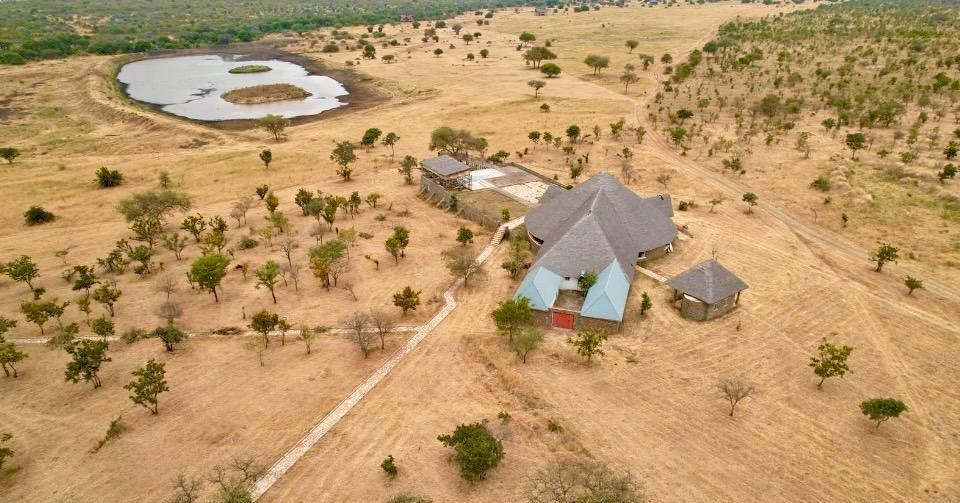
Environmental responsibility is a planning priority for the proposed developments. Site assessment, design, approvals and operating plans will determine what can be delivered.
The project intends to consider resource use, local participation and habitat within site assessment and design. These are development priorities; no operating performance or certification is claimed.
Areas to assess · no performance targets claimed
Assess demand, generation and storage options.
Confirm site availability, quality and reuse potential.
Evaluate local sourcing and environmental impacts.
Set measurable targets after baselines are established.
Assess energy demand, renewable generation, storage and resilience against verified site conditions before setting targets.
Confirm water availability and quality, then assess conservation, treatment and reuse options for the selected site.
Explore suitable local materials and suppliers in line with project needs, responsible sourcing and quality requirements.
Consider passive design, material impacts and construction practices through the site-specific design and approvals process.
Assess practical opportunities for local food sourcing and suitable growing, with no farm or supply target claimed.
Develop waste prevention, sorting and responsible disposal measures as part of the eventual operating plan.
Site planning should consider habitat, wildlife movement, permissions and conservation priorities with qualified local partners.
Set useful measures and reporting only after project scope, baseline data and operating responsibilities are established.
Materials & systems under consideration
What a project is made of—and how it is built—can matter as much as how it looks. We are exploring specialist systems that may offer useful approaches to construction, structural materials and indoor comfort, subject to site-specific technical review.
01 / CONSTRUCTION
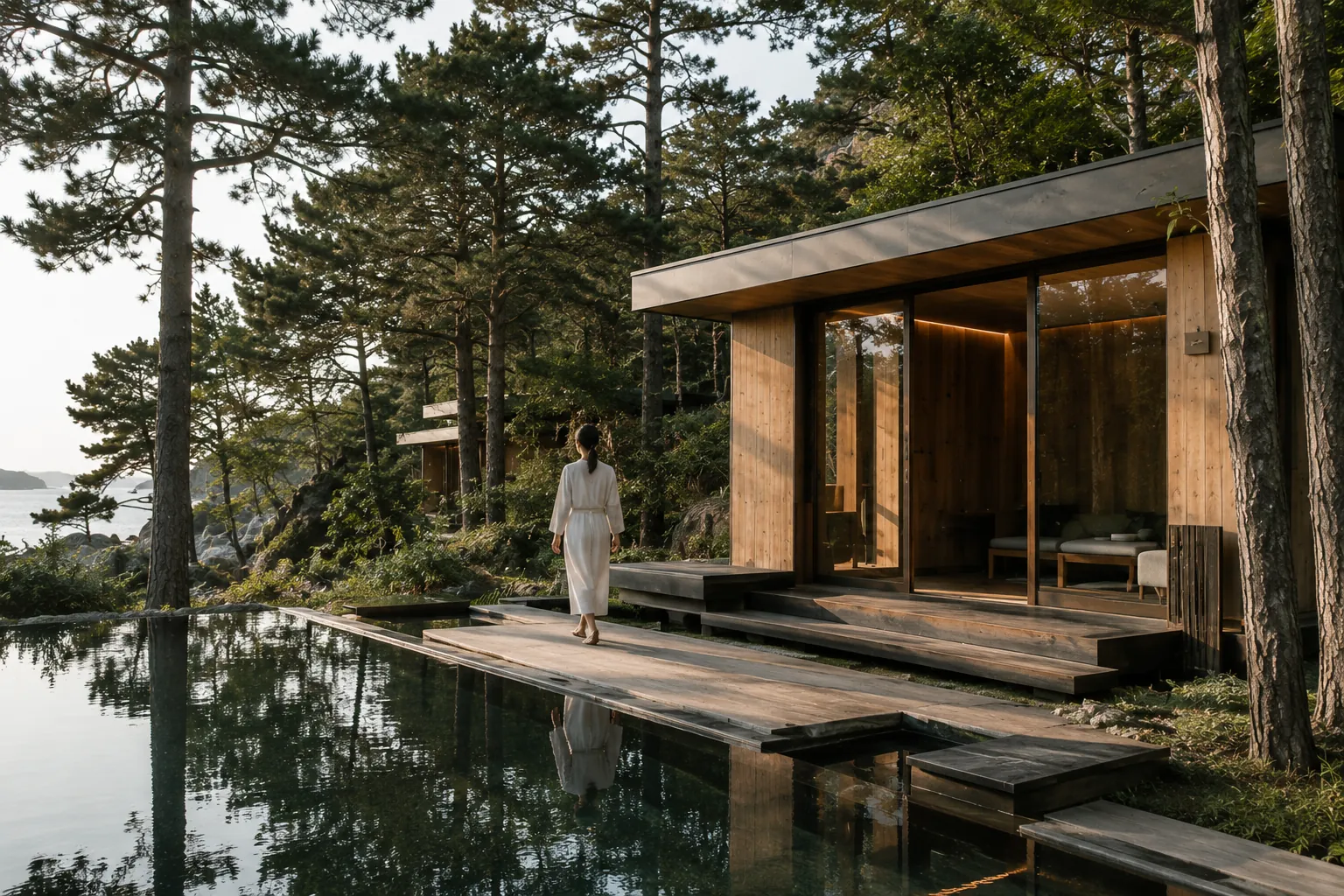
EPIC Cabins describes a panelised, factory-led approach in which building elements are prepared away from the site and assembled on location. For remote or sensitive places, this prompts a practical question: can more precision off-site mean less time and disruption on the ground?
Explore EPIC CabinsImage: EPIC Cabins · concept image
02 / STRUCTURAL MATERIALS
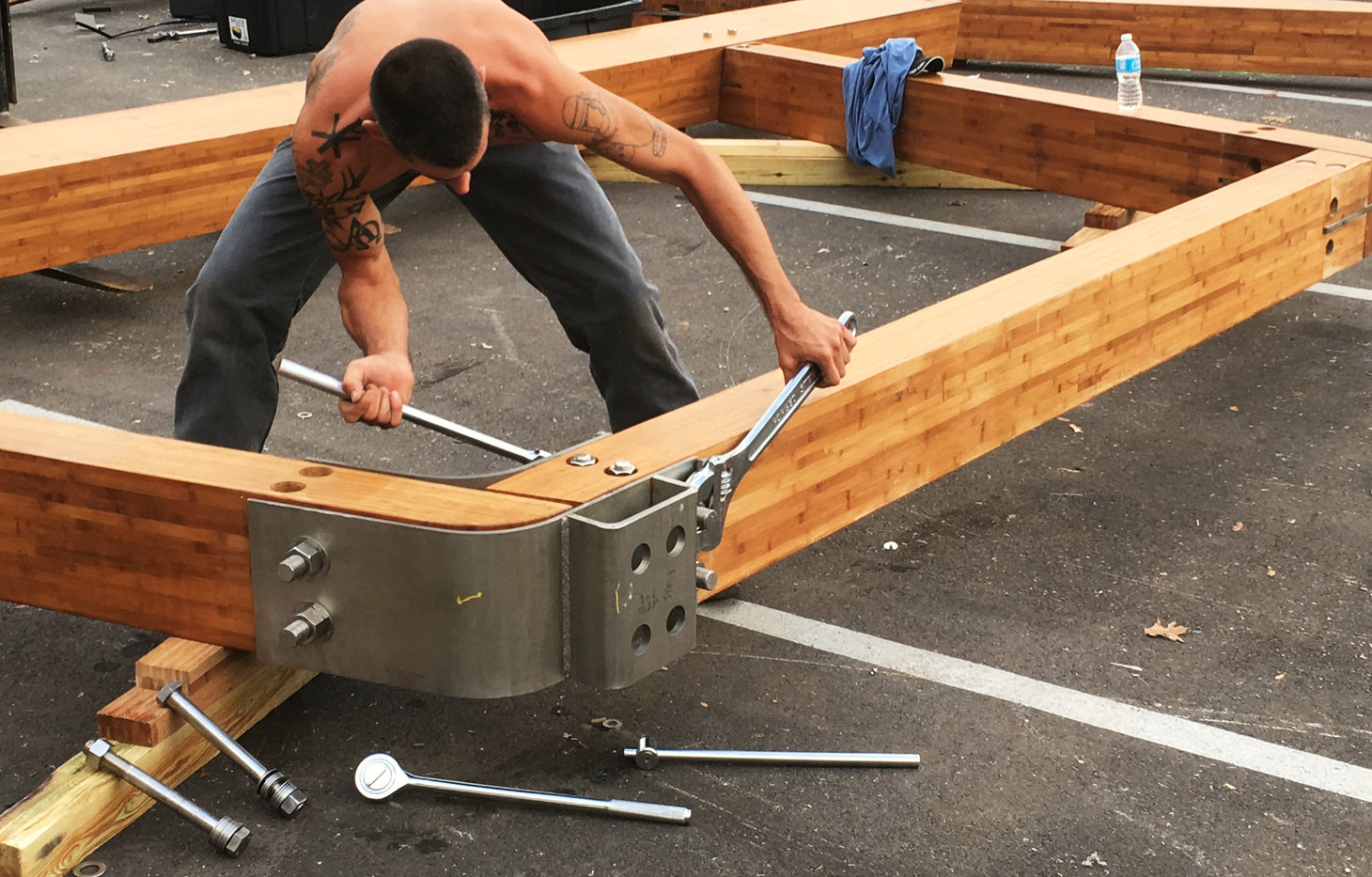
LoüTeq develops Structural Engineered Bamboo components, including beams, columns and joists. Its work invites a closer look at how structural performance, material sourcing and energy considerations might be balanced in a future project.
Explore LoüTeqImage: LoüTeq · structural systems

03 / BUILDING COMFORT
ArgillaTherm’s HUMID clay modules form the basis of surface systems designed for heating, cooling and humidity management. The diagram shows the system itself—not a finished building. Its suitability would need careful assessment against Randilen’s climate, water availability, energy design and maintenance needs.
See ArgillaThermSystem diagram: ArgillaTherm · HUMID module system
Local sourcing is part of the picture. Local furniture, fixtures and equipment (FF&E) suppliers will be added as project sourcing conversations develop.
These are suppliers and systems being explored, not confirmed partners or selected specifications. No deployment, performance outcome or local approval is implied; any future use depends on detailed design and technical review.
Energy
Renewable energy and storage are options to assess against verified site demand, grid access, resilience needs and environmental approvals. No system has been selected or installed as part of this proposed project.

The project aims to assess local sourcing, employment and skills opportunities with suitable partners as scope and delivery arrangements are established.
Assess suitable suppliers against project needs, quality and availability.
Develop practical learning and local career pathways with delivery partners.
Define fair working conditions and welfare standards in the operating plan.

Explore the proposed community and skills priorities, and how local partnerships could shape the development.